
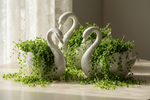
Baby’s Tears — also known as Mind‑Your‑Own‑Business, or by its botanical name Soleirolia soleirolii — is one of those plants that quietly transforms any space it occupies. With its tiny, rounded leaves and soft, trailing habit, it creates a dense, cushion‑like carpet of green that feels both delicate and luxurious. Whether tumbling over the edge of a pot or weaving its way across a shady corner of the garden, this charming evergreen brings instant texture and life to its surroundings.
What makes Baby’s Tears so special?
At first glance, Baby’s Tears looks almost too dainty to be robust — but don’t be fooled. This plant is a fast‑growing spreader, sending out slender stems covered in miniature leaves that form a thick, velvety mat. Its growth habit makes it ideal for:
- Indoor houseplants
- Terrariums and bottle gardens
- Underplanting for larger houseplants
- Shady outdoor groundcover
- Trailing displays in pots, bowls, and hanging containers
Indoors, it thrives in bright but indirect light, where its cascading foliage softens shelves, windowsills, and plant groupings. Outdoors, it excels in cool, moist, lightly shaded areas, creating a natural carpet that feels almost woodland in character.
A popular houseplant in the UK
In the UK, Baby’s Tears is most commonly grown as a houseplant, prized for its ability to fill space quickly and create a lush, living “mossy” effect. It’s especially popular in:
- Terrariums
- Fairy gardens
- Decorative bowls
- Bathrooms with good humidity
Its fine texture makes it a perfect contrast plant, pairing beautifully with ferns, ivies, and other shade‑loving foliage.
Growing Baby’s Tears outdoors
Although often kept indoors, Baby’s Tears can also be used as an outdoor groundcover in mild or coastal climates. It spreads readily, filling gaps between paving stones, softening the edges of paths, and covering bare soil beneath shrubs.
However, it’s important to note:
- It is not fully hardy in the coldest parts of the UK.
- Frost may cause the foliage to die back.
- In many gardens, it re‑emerges in spring, regrowing from protected roots.
Gardeners in sheltered or temperate areas often find it behaves like a semi‑hardy perennial, returning year after year with minimal fuss.
Care tips for happy, healthy growth
Baby’s Tears is easy to grow once you understand its preferences:
Light
- Bright, indirect light indoors
- Partial to full shade outdoors
- Avoid harsh midday sun, which can scorch the leaves
Water
- Prefers consistently moist soil
- Never allow it to dry out completely
- Enjoys higher humidity, especially indoors
Soil
- Light, well‑draining compost
- Slightly acidic to neutral pH
Temperature
- Ideal indoors: 15–24°C
- Outdoors: best in mild, frost‑free or sheltered areas
Growth habit
- Fast spreading
- Can be trimmed to maintain shape and density
- Excellent for softening hard edges in pots and borders
Why gardeners love it
Baby’s Tears is one of those plants that quietly earns its place in a collection. It’s:
- Versatile – equally at home indoors or out
- Textural – adds softness and visual interest
- Low‑growing – perfect for groundcover or trailing displays
- Fast‑growing – fills space quickly
- Charming – its tiny leaves create a unique, almost magical look
Whether you’re creating a miniature garden, refreshing a terrarium, or looking for a lush indoor plant that brings instant greenery, Baby’s Tears is a timeless favourite that never quite goes out of style.
Baby's Tears Plants For Sale
A selection of golden, silver, and green baby's tears plants available when in season.


